
Why Are My Feet Numb?

Numbness in the feet can result from various medical conditions, each requiring careful consideration. Nerve damage, often due to diabetes or injuries, can disrupt normal sensation, leading to feelings of tingling or numbness. A lack of blood supply, commonly seen in conditions like peripheral artery disease, can also cause numbness due to insufficient oxygen reaching the nerves. Deep vein thrombosis is another serious cause, where a blood clot in a deep vein can restrict blood flow, leading to swelling and numbness. Additionally, frostbite, which can cause severe foot pain, and can damage the nerves, resulting in numbness and loss of sensation. If you have foot pain or your feet are numb,it is suggested that you contact a podiatrist who can tell you why, and offer effective relief and treatment solutions.

Foot Pain

Foot pain can be extremely painful and debilitating. If you have a foot pain, consult with Charles Oehrlein, DPM from Hoover Foot Care. Our practitioner will assess your condition and provide you with quality foot and ankle treatment.

Causes

Foot pain is a very broad condition that could be caused by one or more ailments. The most common include:

  • Bunions
  • Hammertoes
  • Plantar Fasciitis
  • Bone Spurs
  • Corns
  • Tarsal Tunnel Syndrome
  • Ingrown Toenails
  • Arthritis (such as Gout, Rheumatoid, and Osteoarthritis)
  • Flat Feet
  • Injury (from stress fractures, broken toe, foot, ankle, Achilles tendon ruptures, and sprains)
  • And more

Diagnosis

To figure out the cause of foot pain, podiatrists utilize several different methods. This can range from simple visual inspections and sensation tests to X-rays and MRI scans. Prior medical history, family medical history, and any recent physical traumatic events will all be taken into consideration for a proper diagnosis.

Treatment

Treatment depends upon the cause of the foot pain. Whether it is resting, staying off the foot, or having surgery; podiatrists have a number of treatment options available for foot pain.

If you have any questions, please feel free to contact our office located in Hoover, Oneonta, and Munford, AL . We offer the newest diagnostic and treatment technologies for all your foot care needs.

Read more about Foot Pain

Types of Broken Ankles

Ankle fractures can vary based on the location and severity of the injury. Common types of broken ankles include lateral malleolus fractures, which affect the fibula on the outer side of the ankle, and medial malleolus fractures, affecting the tibia on the inner side. Some patients may experience both, leading to bimalleolar fractures. Trimalleolar fractures involve three areas, which are the lateral, medial, and posterior malleoli. Pilon fractures, also known as plafond fractures, occur at the lower part of the tibia. Ankle fractures usually result from a high-energy impact, such as falls or car accidents, and often involve damage to both the bone and surrounding joint surfaces. Maisonneuve fractures involve both an ankle sprain and a break higher up the fibula. A podiatrist can assess the type of fracture through imaging tests and provide treatment options, which may include immobilization or surgery. If you believe you have broken your ankle, it is suggested that you make an emergency appointment with a podiatrist for an exam and diagnosis.

Broken ankles need immediate treatment. If you are seeking treatment, contact Charles Oehrlein, DPM from Hoover Foot Care. Our practitioner can provide the care you need to keep you pain-free and on your feet. 

Broken Ankles
A broken ankle is experienced when a person fractures their tibia or fibula in the lower leg and ankle area. Both of these bones are attached at the bottom of the leg and combine to form what we know to be our ankle.

When a physician is referring to a break of the ankle, he or she is usually referring to a break in the area where the tibia and fibula are joined to create our ankle joint. Ankles are more prone to fractures because the ankle is an area that suffers a lot of pressure and stress. There are some obvious signs when a person experiences a fractured ankle, and the following symptoms may be present.

Symptoms of a Fractured Ankle

  • Excessive pain when the area is touched or when any pressure is placed on the ankle
  • Swelling around the area
  • Bruising of the area
  • Area appears to be deformed

If you suspect an ankle fracture, it is recommended to seek treatment as soon as possible. The sooner you have your podiatrist diagnose the fracture, the quicker you’ll be on the way towards recovery.

If you have any questions, please feel free to contact our office located in Hoover, Oneonta, and Munford, AL . We offer the newest diagnostic and treatment technologies for all your foot care needs.

Read more about All About Broken Ankles

Diabetes Inhibits Foot Wound Healing

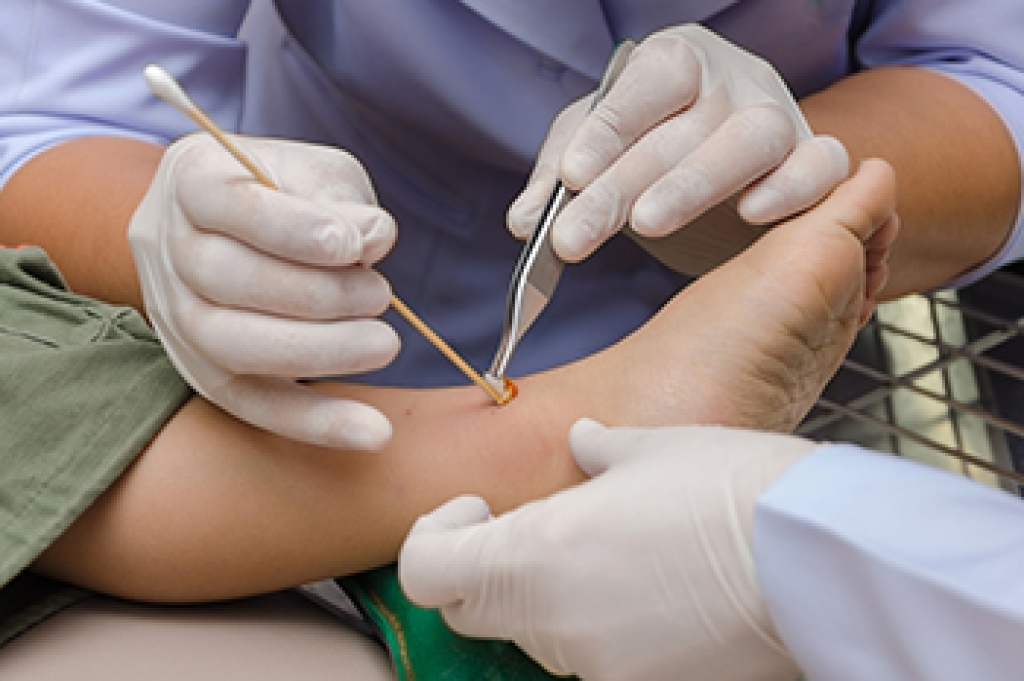
Diabetes can significantly affect the body’s ability to heal foot wounds, making even minor injuries challenging to treat. High blood sugar levels can hinder the wound-healing process by disrupting cellular activity and reducing the body’s ability to fight off infections. Poor circulation, common in people with diabetes, further complicates wound healing by restricting blood flow and nutrient delivery to affected areas. Neuropathy, or nerve damage, can make it difficult for patients to detect foot wounds, increasing the risk of unnoticed injuries becoming serious infections. A podiatrist plays an essential role in managing diabetic foot wounds by assessing the injury, providing specialized wound care, and recommending preventive strategies. If you have foot wounds that do not heal, it is suggested that you schedule an appointment with a podiatrist for an exam and treatment.

Wound care is an important part in dealing with diabetes. If you have diabetes and a foot wound or would like more information about wound care for diabetics, consult with Charles Oehrlein, DPM from Hoover Foot Care. Our practitioner will assess your condition and provide you with quality foot and ankle treatment.

What Is Wound Care?

Wound care is the practice of taking proper care of a wound. This can range from the smallest to the largest of wounds. While everyone can benefit from proper wound care, it is much more important for diabetics. Diabetics often suffer from poor blood circulation which causes wounds to heal much slower than they would in a non-diabetic. 

What Is the Importance of Wound Care?

While it may not seem apparent with small ulcers on the foot, for diabetics, any size ulcer can become infected. Diabetics often also suffer from neuropathy, or nerve loss. This means they might not even feel when they have an ulcer on their foot. If the wound becomes severely infected, amputation may be necessary. Therefore, it is of the upmost importance to properly care for any and all foot wounds.

How to Care for Wounds

The best way to care for foot wounds is to prevent them. For diabetics, this means daily inspections of the feet for any signs of abnormalities or ulcers. It is also recommended to see a podiatrist several times a year for a foot inspection. If you do have an ulcer, run the wound under water to clear dirt from the wound; then apply antibiotic ointment to the wound and cover with a bandage. Bandages should be changed daily and keeping pressure off the wound is smart. It is advised to see a podiatrist, who can keep an eye on it.

If you have any questions please contact our office located in Hoover, Oneonta, and Munford, AL . We offer the newest diagnostic and treatment technologies for all your foot and ankle needs.

Read more about Wound Care

Recovering from Morton's Neuroma Surgery

Recovery from Morton's neuroma surgery typically involves a gradual process that emphasizes rest and rehabilitation. Initially, patients may need to keep weight off the foot for a few days to reduce swelling and discomfort. By the end of the first week, many can begin gentle range-of-motion exercises to promote flexibility. After two to four weeks, most individuals can gradually reintroduce weight-bearing activities, but high-impact exercises should be avoided until cleared by a podiatrist. Strengthening exercises can be incorporated around the four to six-week mark, focusing on improving stability and muscle support. Wearing appropriate footwear is critical during recovery to ensure comfort and prevent further irritation. If you have Morton's neuroma, it is strongly suggested that you consult a podiatrist who can determine if this type of foot surgery is right for you.

Morton’s neuroma is a very uncomfortable condition to live with. If you think you have Morton’s neuroma, contact Charles Oehrlein, DPM of Hoover Foot Care. Our practitioner will attend to all of your foot care needs and answer any of your related questions.  

Morton’s Neuroma

Morton's neuroma is a painful foot condition that commonly affects the areas between the second and third or third and fourth toe, although other areas of the foot are also susceptible. Morton’s neuroma is caused by an inflamed nerve in the foot that is being squeezed and aggravated by surrounding bones.

What Increases the Chances of Having Morton’s Neuroma?

  • Ill-fitting high heels or shoes that add pressure to the toe or foot
  • Jogging, running or any sport that involves constant impact to the foot
  • Flat feet, bunions, and any other foot deformities

Morton’s neuroma is a very treatable condition. Orthotics and shoe inserts can often be used to alleviate the pain on the forefront of the feet. In more severe cases, corticosteroids can also be prescribed. In order to figure out the best treatment for your neuroma, it’s recommended to seek the care of a podiatrist who can diagnose your condition and provide different treatment options.

If you have any questions, please feel free to contact our office located in Hoover, Oneonta, and Munford, AL . We offer the newest diagnostic and treatment technologies for all your foot care needs.

Read more about What is Morton's Neuroma?

Connect With Us

scroll to top