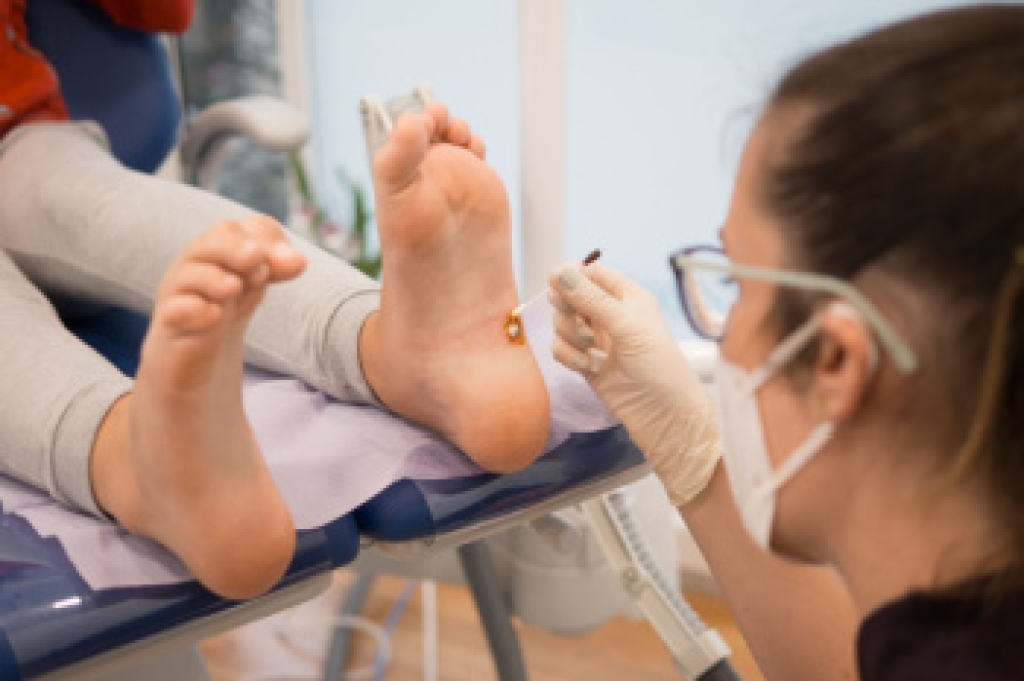
Plantar warts, also called verrucas, are thickened skin growths that develop on the soles of the feet and toes. They are caused by human papillomavirus, or HPV, which infects the skin’s outer layer. The virus can spread through direct contact with infected skin scales on damp public floors, including changing rooms, showers, and swimming-pool areas. Plantar warts can also spread to nearby skin through scratching or rubbing. They are not hereditary and are non-cancerous. A wart can be small or grow larger than one centimeter, and some appear in tightly packed groups called mosaic warts.
Plantar warts can develop anywhere on the sole, but those on weight-bearing areas can become uncomfortable or painful when walking. Their surface can look rough and raised, and tiny black dots can appear inside the growth. These dots are small, clotted blood vessels. A podiatrist can examine the area and determine whether the growth is a plantar wart or another problem, like a corn. This distinction matters because the conditions require different care. Some plantar warts disappear without treatment, while others remain stubborn. Warts can also return after successful treatment because treatment does not prevent a new HPV infection.
A podiatrist can recommend treatment when a plantar wart causes pain, spreads, or interferes with daily activity. Treatment can include salicylic-acid preparations, cryotherapy, or other office-based methods. Cryotherapy uses liquid nitrogen to freeze the wart and can cause temporary soreness or blistering. Surgery is another option for selected stubborn warts. Treatment results vary, and no method guarantees permanent clearance. Podiatrists can also advise patients on reducing pressure on painful areas and lowering the chance of spreading the virus. If you have developed one or more plantar warts, it is suggested that you schedule an appointment with a podiatrist for effective relief, treatment, and prevention tips.
Plantar warts can be very uncomfortable. If you need your feet checked, contact Charles Oehrlein, DPM from Hoover Foot Care. Our practitioner will assist you with all of your foot and ankle needs.
About Plantar Warts
Plantar warts are the result of HPV, or human papillomavirus, getting into open wounds on the feet. They are mostly found on the heels or balls of the feet.
While plantar warts are generally harmless, those experiencing excessive pain or those suffering from diabetes or a compromised immune system require immediate medical care. Plantar warts are easily diagnosed, usually through scraping off a bit of rough skin or by getting a biopsy.
Symptoms
- Lesions on the bottom of your feet, usually rough and grainy
- Hard or thick callused spots
- Wart seeds, which are small clotted blood vessels that look like little black spots
- Pain, discomfort, or tenderness of your feet when walking or standing
Treatment
- Freezing
- Electric tool removal
- Laser Treatment
- Topical Creams (prescription only)
- Over-the-counter medications
To help prevent developing plantar warts, avoid walking barefoot over abrasive surfaces that can cause cuts or wounds for HPV to get into. Avoiding direct contact with other warts, as well as not picking or rubbing existing warts, can help prevent the further spread of plantar warts. However, if you think you have developed plantar warts, speak to your podiatrist. He or she can diagnose the warts on your feet and recommend the appropriate treatment options.
If you have any questions, please feel free to contact our office located in Hoover, Oneonta, and Munford, AL . We offer the newest diagnostic and treatment technologies for all your foot care needs.
